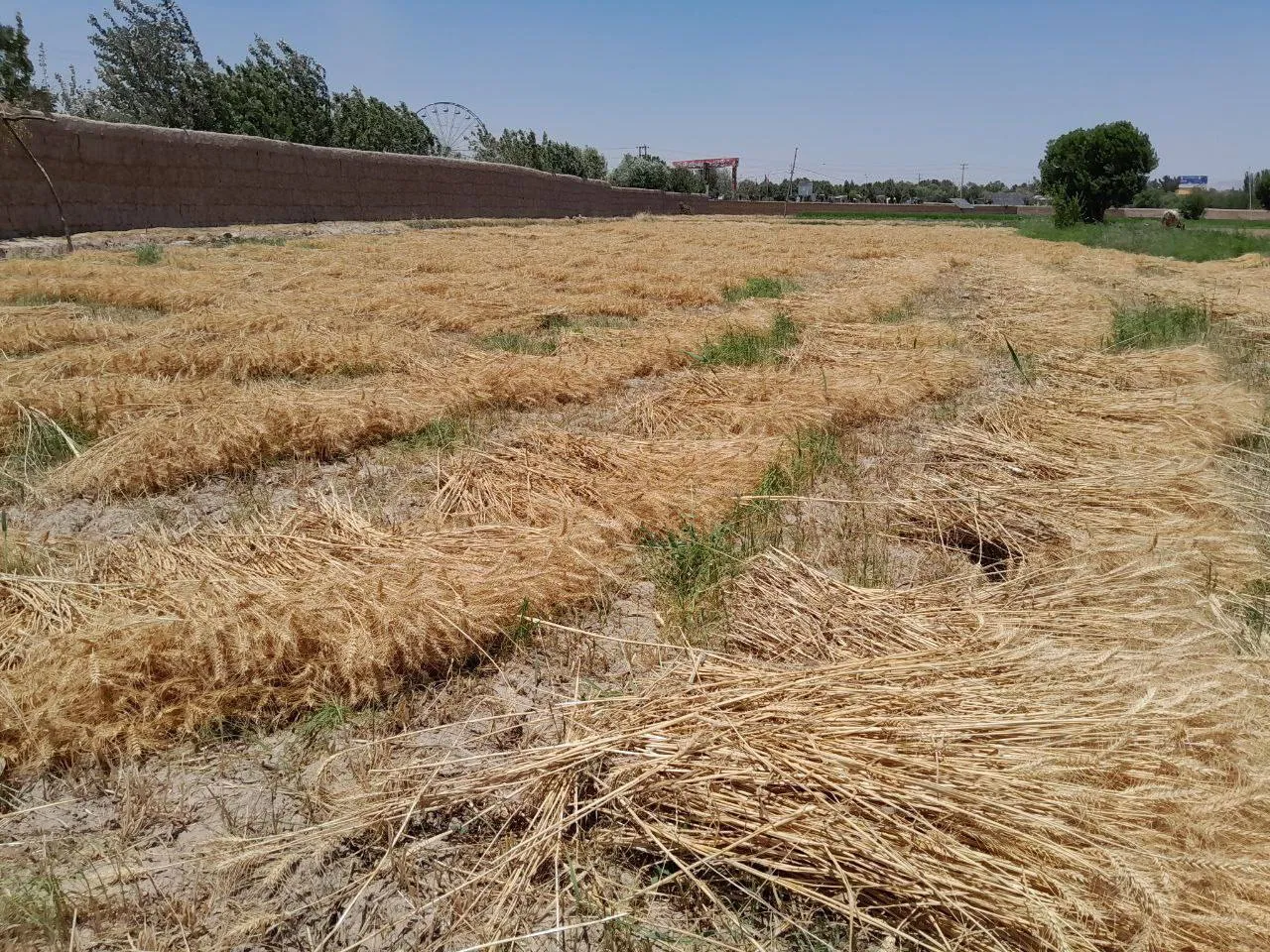
After several years of drought and below-average rainfall, farmers in western Afghanistan are heading into this year’s wheat harvest with renewed optimism.
Agricultural officials in Herat province say wheat production is expected to exceed 600,000 tons this season, reflecting a significant improvement compared with last year. The increase has been largely attributed to stronger winter and spring rainfall, which improved soil moisture levels and boosted both irrigated and rain-fed crops across the province.
According to Bashir Ahmad Ahmadi, head of agricultural affairs at Herat’s Department of Agriculture, more than 100,000 hectares of rain-fed wheat fields have recorded better yields this year. In previous seasons, many of these fields, particularly in districts such as Gulran, Kushk-e-Kohna, and Rabat-e-Sangi, were affected by drought and insufficient rainfall.
Officials estimate that between 220,000 and 250,000 hectares of land were cultivated with wheat across Herat this year. Favorable weather conditions in early spring not only improved wheat production but also led to higher yields of pulses and other seasonal crops.
The expected harvest marks an encouraging development for a province that plays an important role in Afghanistan’s agricultural economy. Wheat remains the country’s most important staple crop and a key source of income for rural households. Improved harvests can help strengthen local food supplies and provide greater economic stability for farming communities that have faced repeated climate-related challenges in recent years.
Herat’s agricultural recovery comes amid broader efforts to support farmers across Afghanistan. Humanitarian organizations and agricultural development partners have expanded assistance programs aimed at improving post-harvest management, reducing crop losses, and strengthening storage capacity. In recent months, farmers in several provinces have received harvesting equipment, grain storage facilities, and technical support to improve productivity and protect harvested grain after collection.
Local officials also report progress in controlling outbreaks of locusts and sunn pests that threatened crops earlier in the season. They say large-scale mitigation efforts have reduced the impact of the infestations and that the pests no longer pose a major threat to this year’s harvest.
While agriculture in Afghanistan remains vulnerable to drought, water shortages, and climate variability, this year’s growing season has provided a rare positive signal. For many farmers in Herat, the combination of improved rainfall and continued agricultural support has created conditions for one of the province’s strongest wheat harvests in recent years.
If the projected figures are realized, the harvest would represent a notable increase from last year’s estimated production of around 450,000 tons, highlighting the extent to which favorable weather conditions can influence agricultural output in a country where much of rural livelihoods still depend on rainfall.