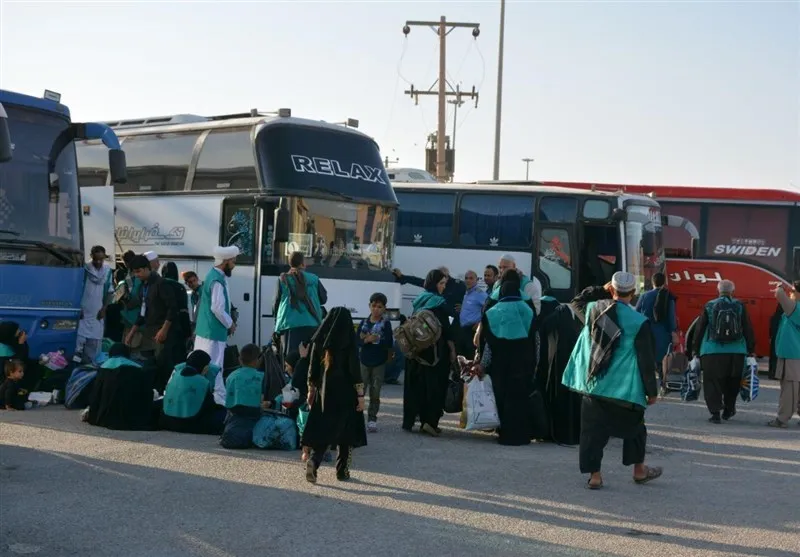
Officials from the Information and Culture Directorate of Afghanistan’s Herat province say around 15,000 Afghan citizens are expected to travel to Iraq through the Islam Qala border crossing this year to participate in Arbaeen ceremonies.
Mohammad Qasim Akhundzada, tourism officer at the Herat Information and Culture Directorate, told Bakhtar News Agency that a joint committee involving several government departments has been established to coordinate and facilitate the process of sending pilgrims.
He said necessary preparations have been made to provide services and facilities for pilgrims in Herat province. Officials added that agreements have been signed with three transportation companies to arrange the overland movement of pilgrims and ensure organized transportation.
The preparations come as thousands of Afghan pilgrims are expected to travel to Iraq for this year’s Arbaeen ceremonies. Authorities in Afghanistan usually coordinate with relevant government institutions and transport companies to facilitate the movement of pilgrims through border crossings and provide necessary services during their journey.
Arbaeen is one of the largest annual religious gatherings in the world, marking the end of the 40-day mourning period following the martyrdom of Imam Hussein, the grandson of Prophet Muhammad, at the Battle of Karbala in 680 AD. Millions of pilgrims from different countries travel to Iraq every year to participate in ceremonies held in the holy city of Karbala.
For Afghan pilgrims, the Islam Qala border crossing in western Herat is one of the main routes used to enter Iran before continuing their journey toward Iraq. Located on the Afghanistan-Iran border, Islam Qala is one of Afghanistan’s busiest crossings and plays an important role in passenger movement, trade, and regional connectivity.
Herat has historically served as a key transit point for travelers heading toward Iran and Iraq, particularly during major religious occasions such as Arbaeen. The movement of thousands of pilgrims through the province highlights the importance of border management, transportation services, and regional cooperation.