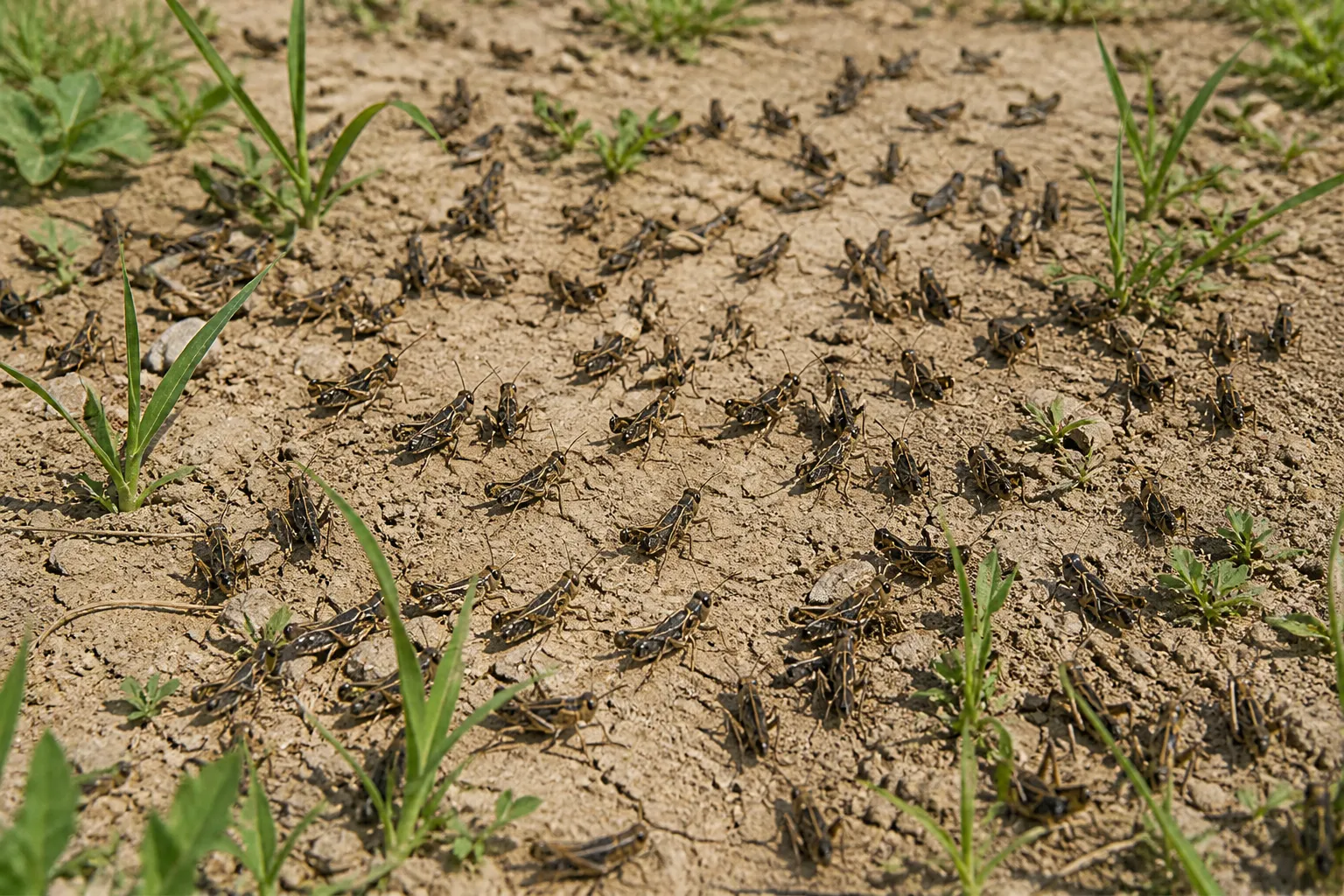
QALA-E-NAW, AFGHANISTAN – The Directorate of Agriculture, Irrigation, and Livestock in northwestern Badghis province has intensified its anti-pest campaign, clearing over 1,200 hectares (6,000 jeribs) of agricultural land from locusts and harmful insects, officials announced.
The operations, conducted by professional teams, have primarily targeted the high-risk districts of Bala Murghab, Sang-Atash, Muqur, and Abkamari to prevent catastrophic crop failures and mitigate economic losses for local farmers.
Community Mobilization and Official Response
In a recent strategic meeting, Badghis Governor Mullah Mohammad Wali Jan Rahmat Akhund met with tribal elders, influential figures, and district representatives from Muqur to coordinate immediate containment measures. Governor Rahmat Akhund acknowledged the sudden, massive influx of harmful pests—locally known as Kashfak and locusts—noting that while government departments have launched serious interventions, sustained efforts remain critical for total eradication.
The Governor urged local communities to initiate joint, hands-on efforts alongside official teams to safeguard their livelihoods. In response, Muqur representatives confirmed that local farmers have already mobilized, executing localized chemical spraying campaigns in close coordination with provincial authorities.
Rising Regional Threat and Economic Anxiety
Despite the recent clearance of an additional 115 jeribs across the province, deep anxiety persists among local farmers who warned that any further spread would completely devastate this season’s yield. Agriculture in Badghis and neighboring regions has faced a notable surge in pest infestations over recent years, a trend experts link to shifting weather patterns and prolonged droughts.
The crisis is not isolated to Badghis. A wider swarm has recently hit adjacent provinces, including Herat, threatening the broader agricultural output of western Afghanistan. Because these pests directly impact crop yields, local authorities have pledged to accelerate chemical spraying and containment operations in the coming days to prevent a regional food security crisis.