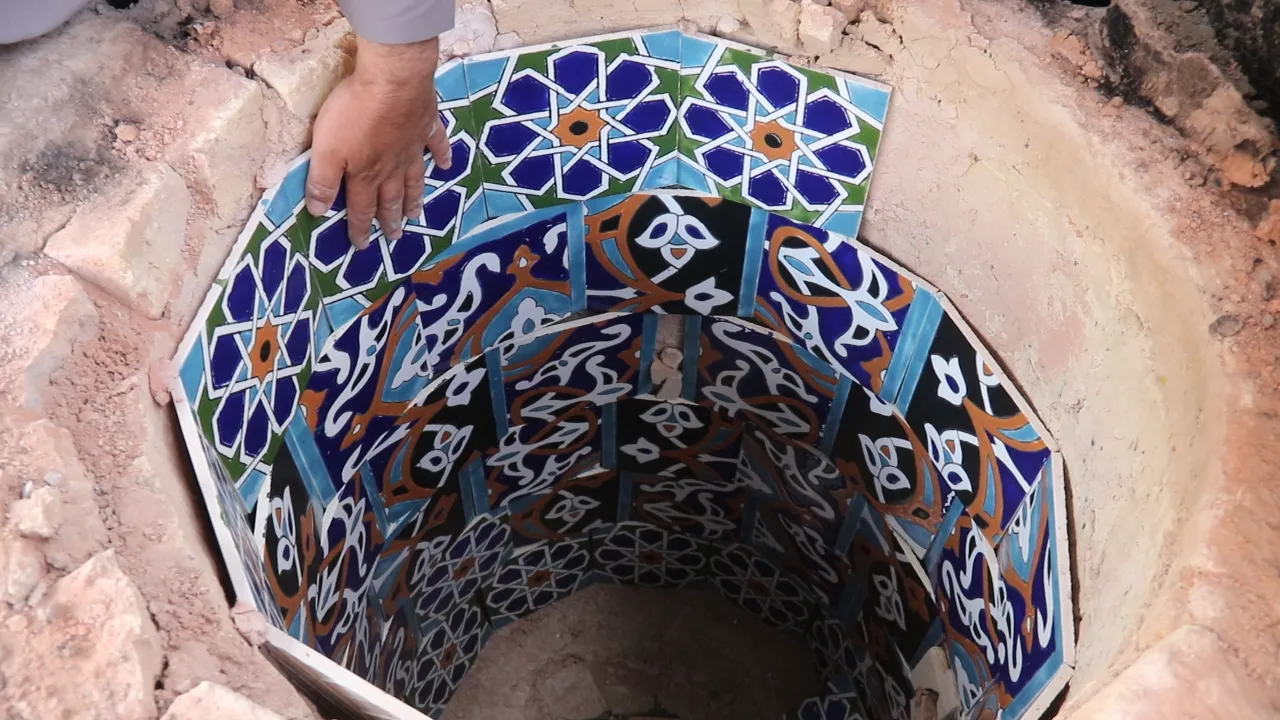
For centuries, the western Afghan city of Herat has been celebrated not only for its rich history but also for artistic traditions that have shaped the region’s cultural identity. Among the most distinctive of these is the centuries-old craft of tilemaking, whose intricate geometric patterns, floral motifs, and elegant calligraphy continue to adorn some of Afghanistan’s most treasured historic monuments.
These handcrafted tiles have decorated mosques, madrasas, mausoleums, and other historic structures since the Timurid era, remaining one of the defining features of Herat’s traditional architecture.
Today, despite changing market demands, the city’s master artisans continue to preserve this heritage while adapting their skills to modern needs.
Preserving a Historic Craft
Officials responsible for the preservation of Herat’s historical monuments say three tilemaking workshops are currently operating in the province, producing both traditional handcrafted tiles for restoration projects and modern industrial tiles for commercial use.
Mohammad Sediq Mir, Director of the Preservation and Protection of Historical Monuments in Herat, told Khate-nakhost that the workshops follow the artistic traditions of the Herat School, producing tiles decorated with authentic patterns, calligraphy, and designs rooted in centuries-old craftsmanship.
According to Mir, these workshops supply restoration projects for historical monuments across Afghanistan while also fulfilling orders for private construction projects.
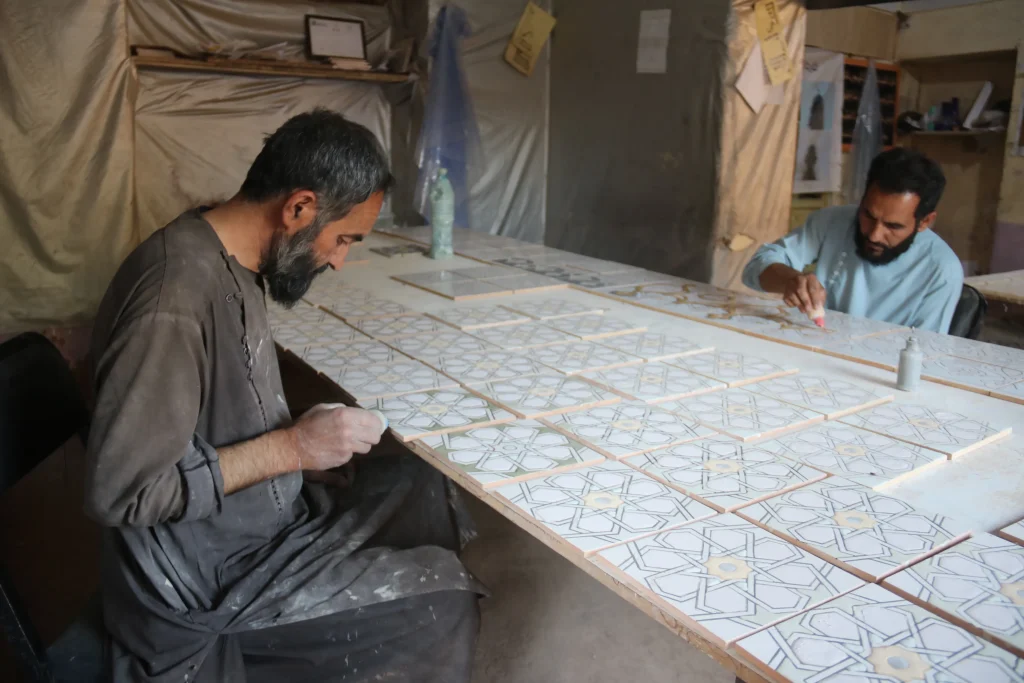
One of the best-known workshops is the Amir Ali Shir Navai Tile Workshop, where six artisans work under the supervision of Mirwali Ahmad Sabri, a master calligrapher and specialist in traditional arts.
Omid Niknam, an artisan who has spent more than two decades practicing the craft, said the workshop was established to safeguard Herat’s historic tilemaking tradition and introduce the city’s distinctive artistic heritage to younger generations.
“Our goal is not only to preserve this ancient craft but also to ensure that the artistic identity of Herat continues to thrive,” he said.
The workshop produces both traditional and industrial tiles, balancing centuries-old techniques with the practical demands of today’s construction market.
Tradition Meets Modern Industry
Herat’s traditional tiles are made from a blend of clay, glass, silica stone, and metal oxides, with most raw materials sourced locally. After undergoing several stages—including design, molding, glazing, painting, and kiln firing—the materials are transformed into decorative tiles that reflect generations of artistic knowledge.
Niknam said the workshop currently produces up to 30 square meters of tiles per month and can expand production to more than 100 square meters if demand increases.
In recent years, the workshops have also expanded into producing industrial ceramic tiles commonly used in commercial buildings and modern construction. The shift reflects growing domestic demand and has helped reduce reliance on imported tiles, particularly those previously brought in from neighboring Iran.
Artisans say local production is increasingly capable of meeting much of Afghanistan’s domestic market while creating new opportunities to sustain the traditional craft.
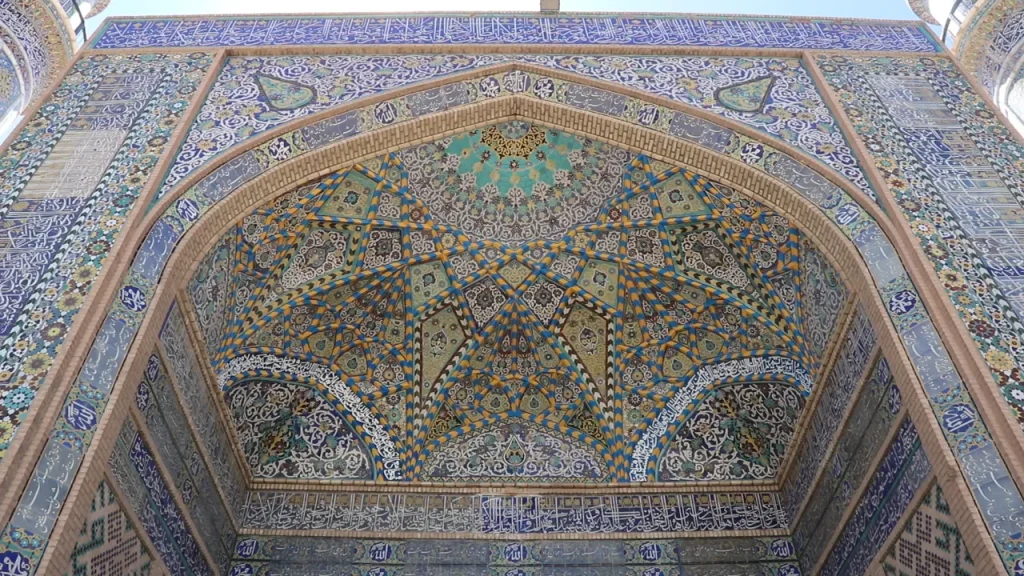
Tilemaking is among Afghanistan’s oldest artistic traditions, reaching its height during the Timurid period, when Herat emerged as one of the Islamic world’s leading centers of architecture and decorative arts. Today, the city’s historic monuments still display the brilliant blue, turquoise, and white tiles that became synonymous with Timurid architecture.
Although centuries have passed, the craft remains alive in the hands of Herat’s artisans, linking Afghanistan’s architectural past with its present and future.
- Afghanistan Finish Continental Futsal Championship with 6-1 Win Over New Zealand
- 15,000 Afghan Pilgrims Expected to Travel to Iraq Through Herat’s Islam Qala Border for Arbaeen
- Herat Workshop Boosts Afghan Food Exports to Europe
- Five Afghan Migrants Found Dead in Nimroz Desert While Attempting to Reach Iran