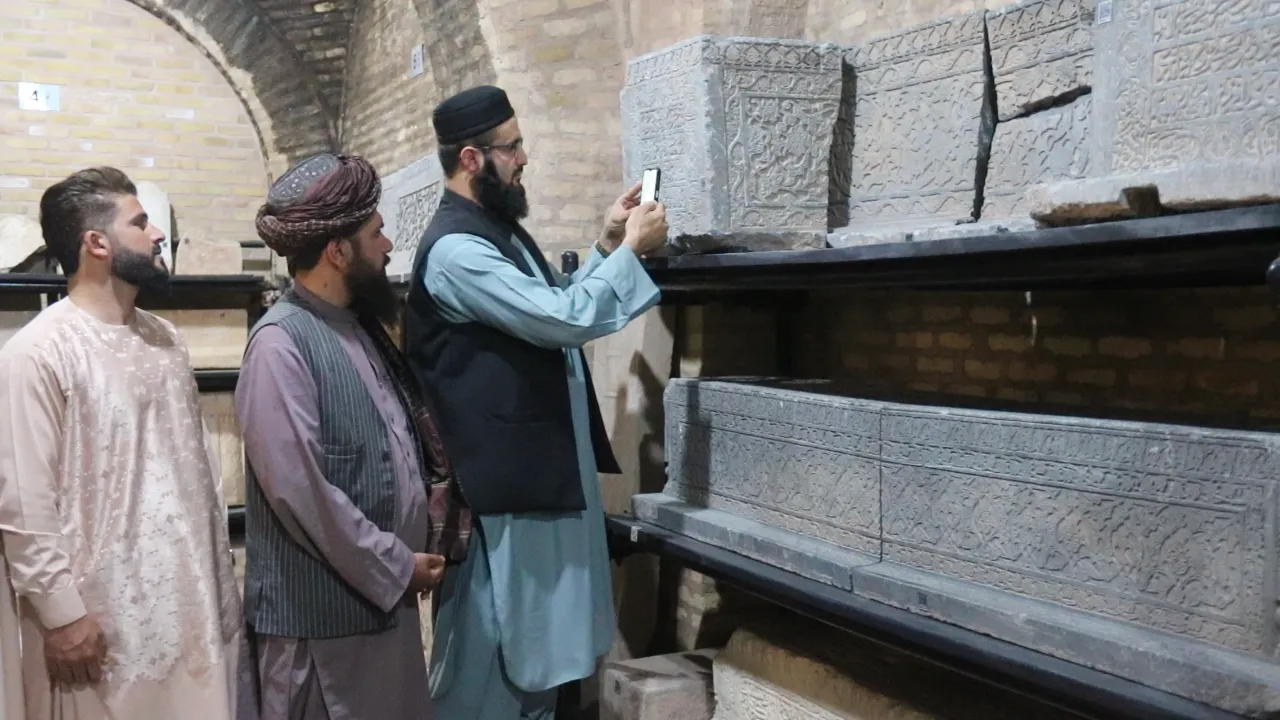
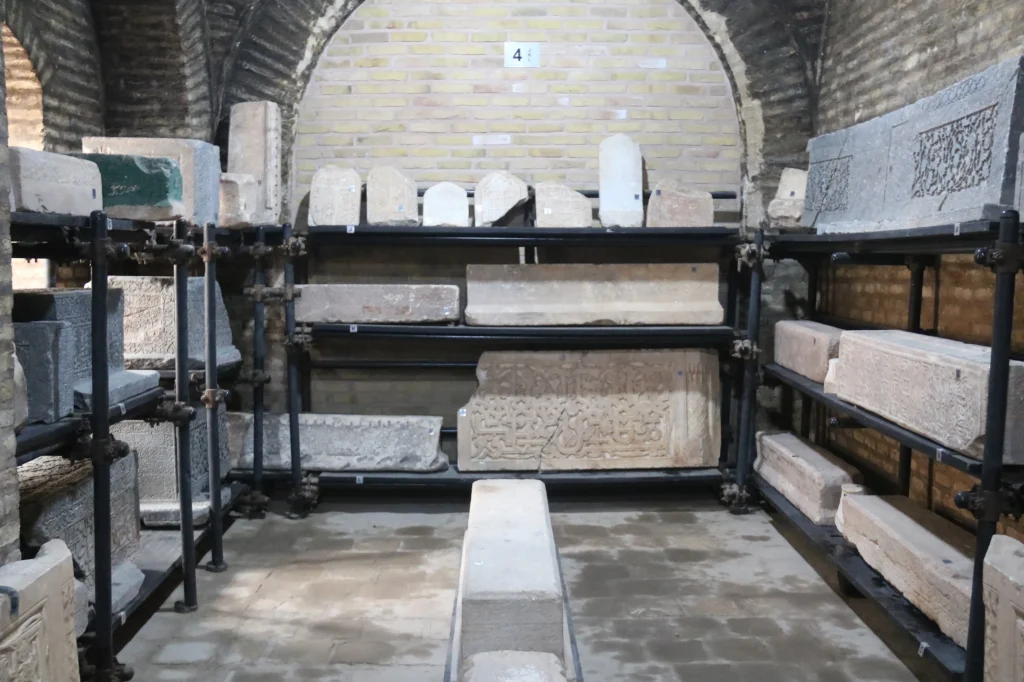
Two newly curated galleries displaying historical stone artifacts have officially opened to visitors inside the ancient Herat Citadel — also known as the Citadel of Ikhtyaruddin — in western Afghanistan. The initiative is part of ongoing efforts to preserve and present the country’s rich cultural and archaeological heritage in a more accessible and modern format.
The exhibition brings together around 220 carved and inscribed stones dating from roughly 50 to 600 years ago. Many of these artifacts are linked to the Timurid era, widely regarded as one of the most significant periods in the cultural and artistic history of the region.
According to Abdul Matin Adel, Head of Culture and Arts at the Herat Department of Information and Culture, the stones were collected from various historical sites, shrines, and archaeological areas across Herat. He explained that the galleries were established not only to display these artifacts, but also to safeguard them from further deterioration, especially those at risk in their original locations.
To enhance the visitor experience, QR codes have been placed beside each artifact. By scanning them, visitors can access detailed information in both Persian and English, offering a more interactive and educational approach to heritage presentation.
A Century-Old Museum Preserving Layers of History
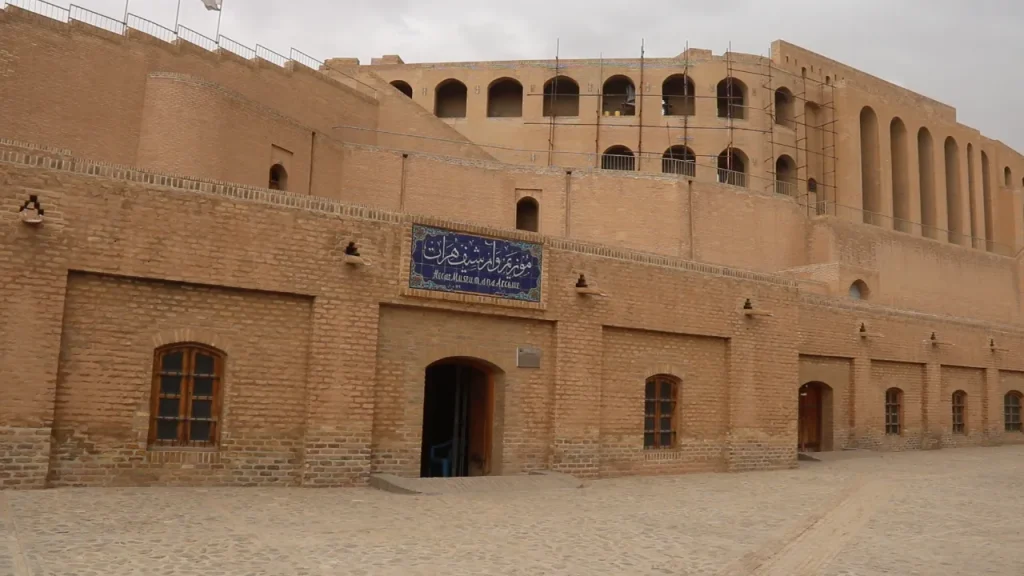
The two galleries are part of the Herat National Museum, a cultural institution with more than a hundred years of history and widely recognized as the second-oldest museum in Afghanistan after the National Museum in Kabul.
Museum Director Naqibullah Haqmal said the institution hosts a wide range of collections representing different historical periods, including artifacts that date back thousands of years to pre-Islamic civilizations. He noted that the museum’s various halls collectively reflect the deep and layered history of Herat as a center of culture, knowledge, and trade.
On average, around 50 visitors — including international tourists — visit the museum each day. Situated within the historic Herat Citadel, it remains one of the province’s most important cultural and tourist landmarks.
Visitors Highlight Afghanistan’s Cultural Richness
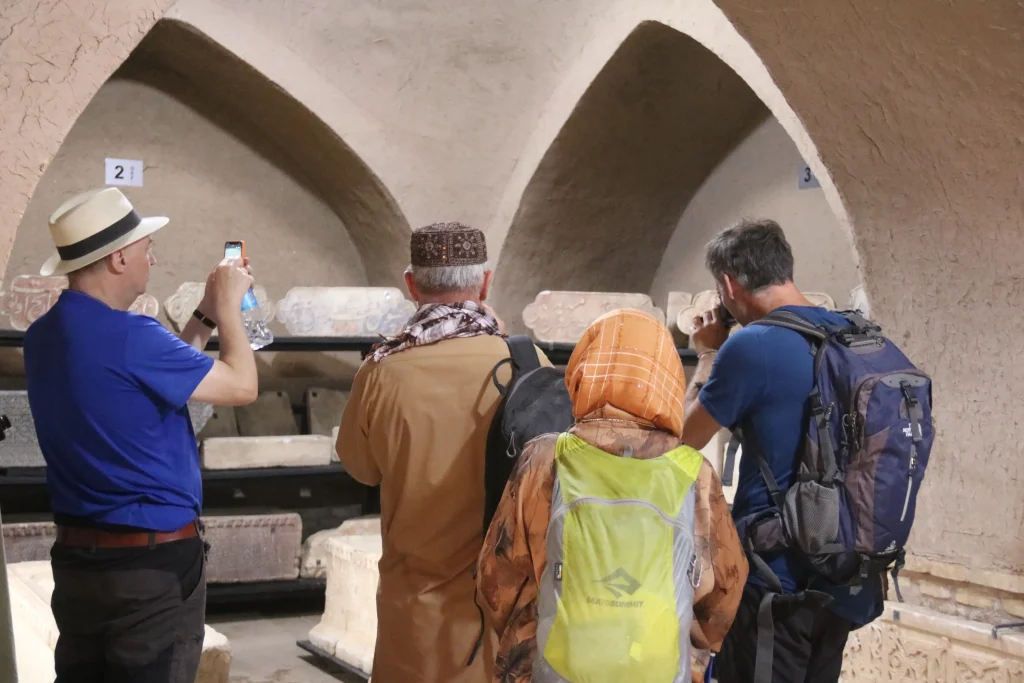
Among recent visitors was Peter, a tourist from the Czech Republic, who visited Afghanistan for the second time. During his trip to Herat, he described the country as having a remarkably rich cultural and historical heritage.
He said he had previously traveled to Mazar-i-Sharif and the Wakhan Corridor, and noted that his personal experience in Afghanistan differed greatly from what is often portrayed in international media.
“What I saw and heard about Afghanistan through the media was very different from what I experienced after coming here,” he said.
Peter added that this would not be his last visit and expressed hope to return again in the future, bringing more friends to explore Afghanistan’s cultural heritage.
Herat, one of Afghanistan’s oldest living cities, is home to hundreds of historical and archaeological sites. According to official estimates, more than 700 heritage locations are registered across the province.
Among its most prominent landmarks are the Herat Citadel, the Friday Mosque of Herat, the Minarets of Herat, and the shrine of Khwaja Abdullah Ansari — enduring symbols of the city’s historical and spiritual legacy that continue to attract visitors from around the world.