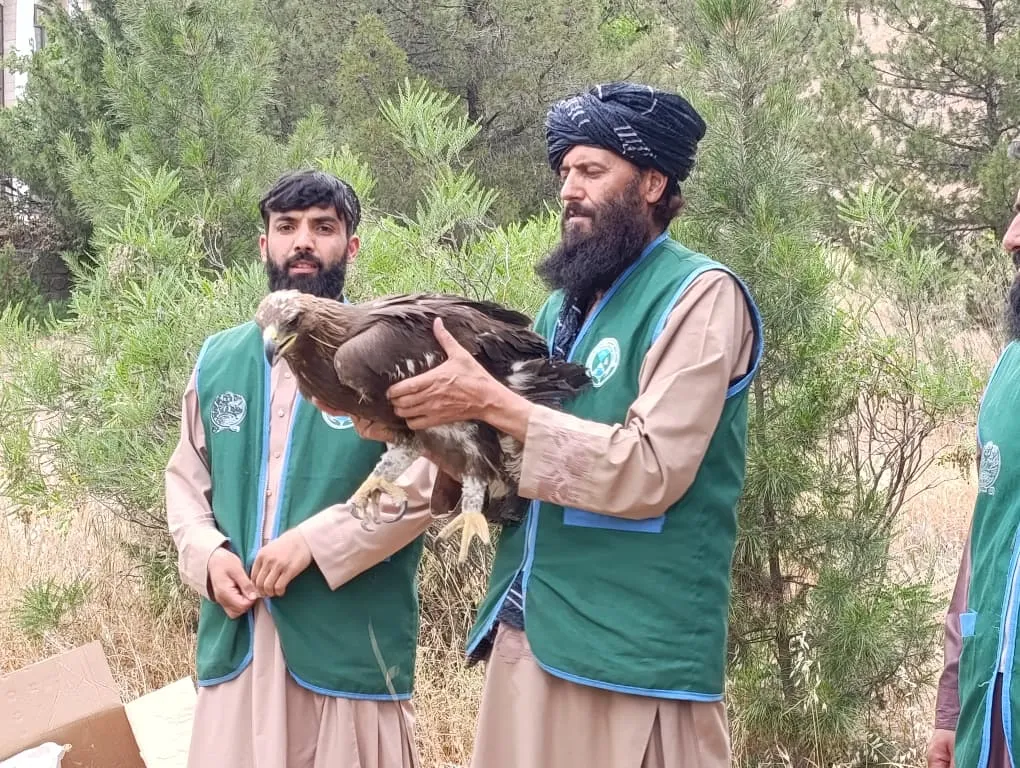
Environmental officials in western Afghanistan have released dozens of rescued wild birds and a snake back into their natural habitat, amid growing concern over illegal hunting and wildlife trafficking in the region.
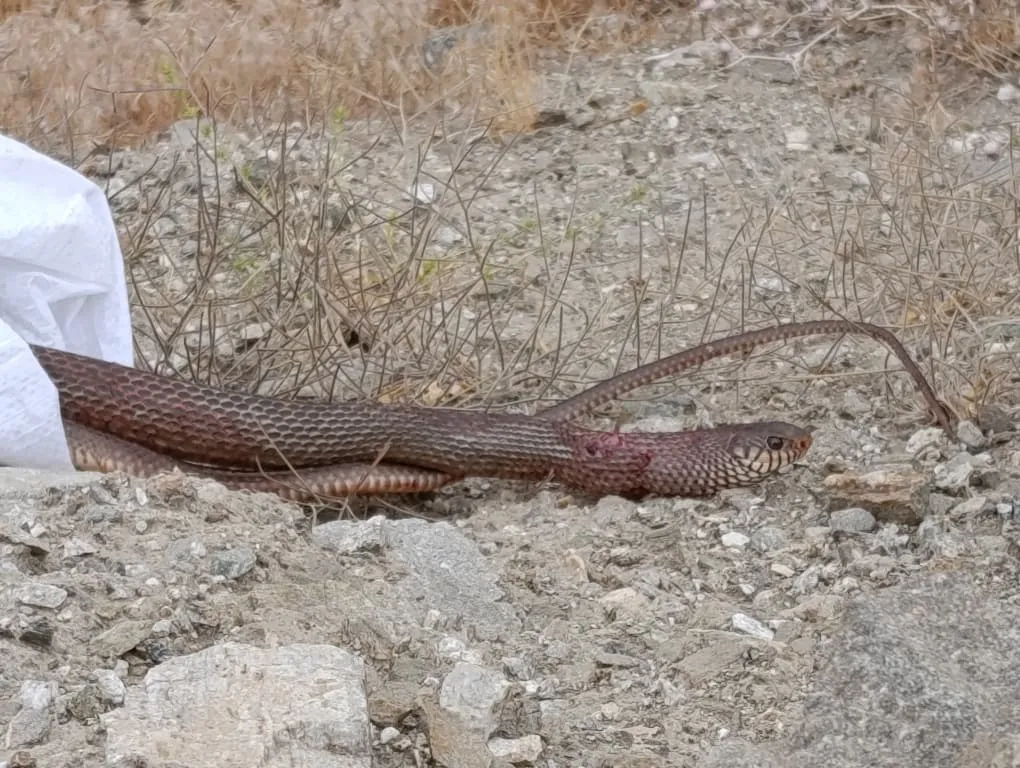
The Department of Environmental Protection in Herat province said 91 birds of various species and one large black snake were recently returned to the wild after being collected from different parts of Herat city.
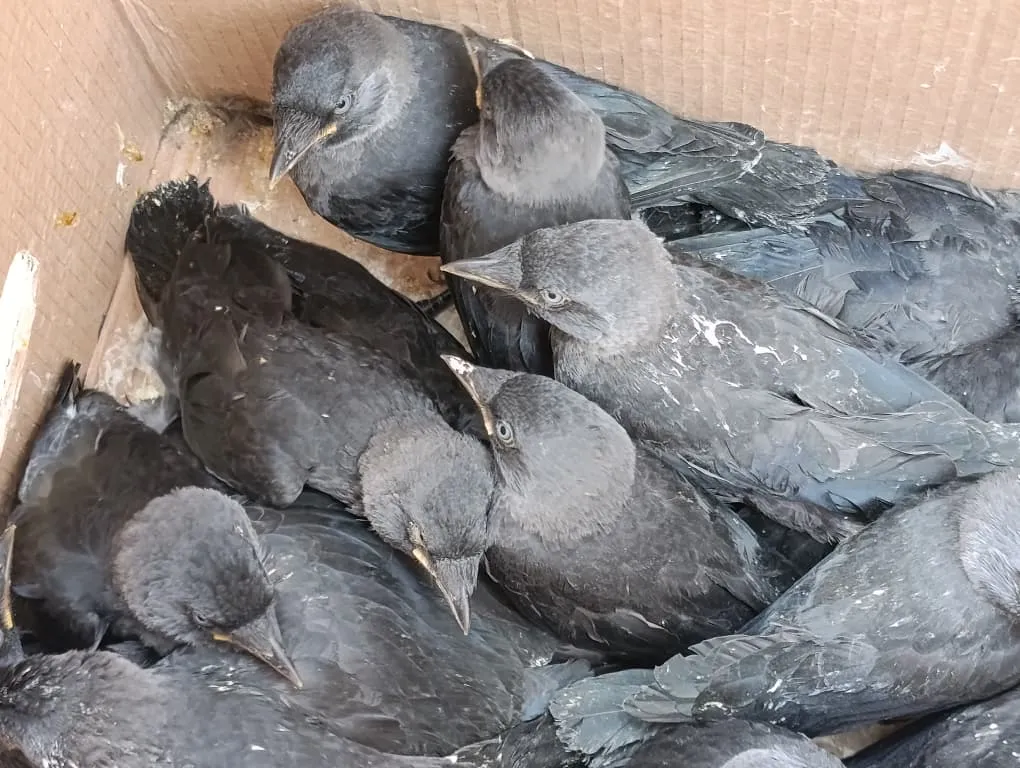
According to local officials, many of the animals had been transported from Ab Kamari district in neighboring Badghis province and were intended for sale in Herat’s bird markets.
Abdul Ali Mottaqi, head of the department, said the rescued wildlife included 40 crows, five cranes, four mynas, two falcons, one eagle, one woodpecker, two partridges, and a large black snake. Another 35 wild crows that had lost their ability to fly and were receiving special care were also released after recovering.
Authorities said 55 birds were released in Takht-e Safar Park on the outskirts of Herat, while the snake was returned to the hills north of the city.
Wildlife Beyond Conservation
Environmental officials say the case reflects broader pressures facing Afghanistan’s fragile wildlife population, where illegal hunting, habitat loss, and unregulated wildlife trade continue to threaten biodiversity.
Although many animals are hunted for local trade or out of fear, experts say several of these species play a critical role in maintaining ecological balance — particularly in rural and agricultural areas.
Snakes, for example, help control rodent populations that damage crops and spread disease. Birds of prey such as falcons and eagles also contribute to natural pest control by regulating smaller animals and insects within the ecosystem.
Environmentalists warn that the decline of predator species can indirectly affect farming communities that rely heavily on agriculture for survival.
Growing Human-Wildlife Tensions
In some parts of Herat, including Rabat Sangi district along the border with Turkmenistan, residents report increasing encounters with wild boars that sometimes enter agricultural land and damage crops.
Local farmers occasionally hunt the animals to protect their fields, reflecting what experts describe as a growing human-wildlife conflict driven by environmental pressure, shrinking habitats, and expanding human activity near natural areas.
Officials in Herat say they have repeatedly carried out awareness campaigns to discourage the hunting, trafficking, and sale of wild animals. Authorities also said they obtained a written commitment from the individual involved in the recent case, pledging not to engage in wildlife hunting or trade again.
Afghanistan hosts a diverse range of wildlife, from migratory birds to rare mountain species, but decades of conflict, drought, deforestation, and weak environmental enforcement have placed many ecosystems under strain.
Despite the challenges, environmental workers say efforts to rescue and rehabilitate wildlife remain essential in preserving ecological balance in a country where natural resources and agriculture remain deeply connected to people’s livelihoods.