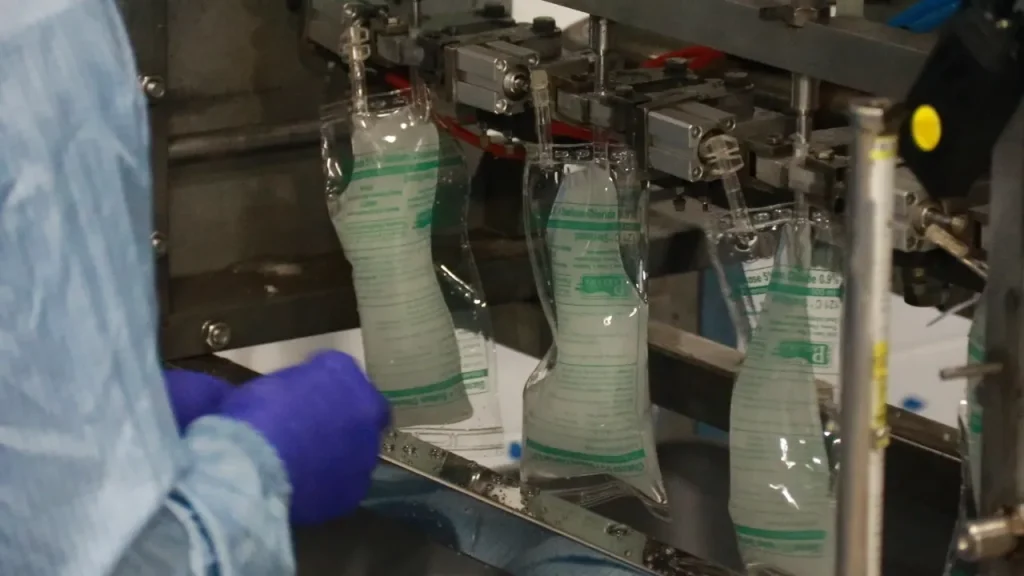
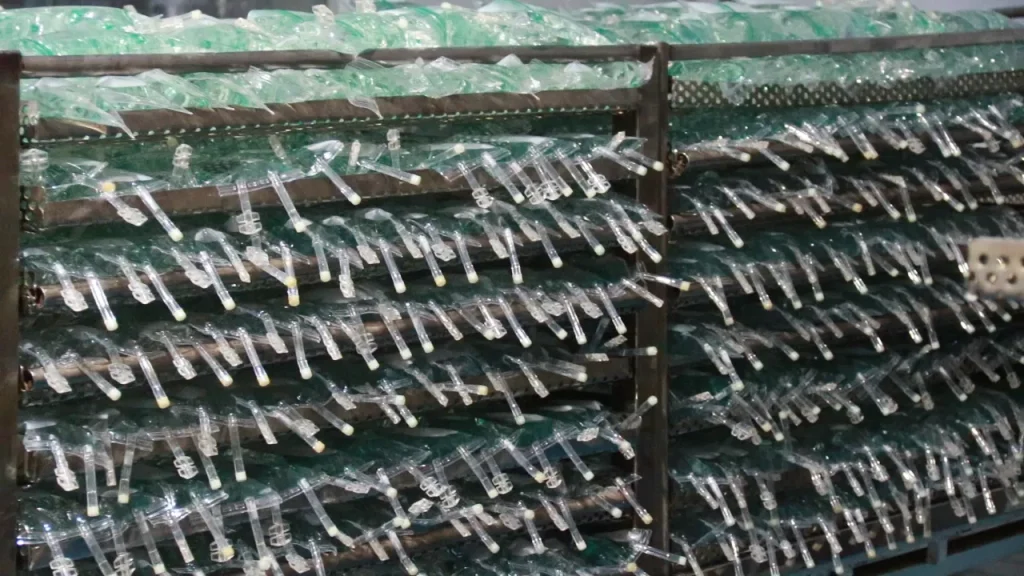
HERAT, AFGHANISTAN – A major pharmaceutical plant in the Herat Industrial City has ramped up its production to 60,000 bags of intravenous (IV) fluids and solutions daily, signaling a significant shift toward medical self-sufficiency in the country.
Mohammad Reza Alami, the head of the Parsawa pharmaceutical factory, told Khate Nakhost that the company commenced operations seven years ago with an initial investment of $1.2 million. Through continuous expansion, the factory’s total capital has now surpassed $3 million.
The enterprise has become a vital source of employment, currently securing jobs for over 100 workers at the production plant and another 150 employees across its 35 sales branches nationwide.
According to Alami, the factory currently operates two advanced production lines, manufacturing 40 different types of IV fluids and antibiotics, all of which are consumed within the domestic market.
Crackdown on Smuggling Drives Industrial Growth
Factory officials attribute this rapid growth to strict regulatory changes, noting that the halt of direct medicine imports from Pakistan and a successful crackdown on pharmaceutical smuggling have created a fertile environment for domestic manufacturers like Parsawa to thrive.
Looking ahead, Parsawa aims to construct six additional production lines. This expansion will allow the company to manufacture oral medicines, syrups, syringes, laboratory bags, and a wider variety of antibiotics. Once these lines are operational, the company plans to export its products to international markets, including Iraq, Syria, Palestine, and several African and Arab nations.
However, supply chain vulnerabilities remain a hurdle. The factory currently imports its raw materials from China. Relying on foreign supply lines leaves production vulnerable to border closures and customs delays. To mitigate this risk, management is actively exploring strategies to produce raw materials domestically in the future.
Industry Demands: A Dedicated Pharma Zone and Reliable Power
The growth of the pharmaceutical sector has prompted calls for structural reforms from industry leaders. Factory owners across Afghanistan are urging the government to establish a dedicated, centralized pharmaceutical industrial zone. This proposed zone would bring together approximately 150 medicine-manufacturing factories currently scattered across various provinces into a single, specialized hub.
Abdul Naser Amin, Head of the Herat Chamber of Industries and Mines, confirmed the positive impact of trade restrictions on Pakistani medicine. He emphasized that multiple factories in the Herat Industrial City are now successfully producing diverse medical supplies for national consumption.
Despite the optimistic outlook, significant obstacles persist. Manufacturers identify chronic shortages of reliable electricity as their most critical operational challenge, calling on the government to urgently address the power deficit to sustain the country’s industrial momentum.
- 724 Humanitarian Aid Trucks Enter Afghanistan Through Torkham Border Crossing
- Herat Seeks Expansion of Trade Through Strategic Khaf–Herat Rail Corridor
- TAPI Pipeline: 64 km Laid in Herat, On Track for 2026 Finish
- Italy, UNESCO Launch Restoration of Mazar-i-Sharif’s Blue Mosque After Earthquake Damage

