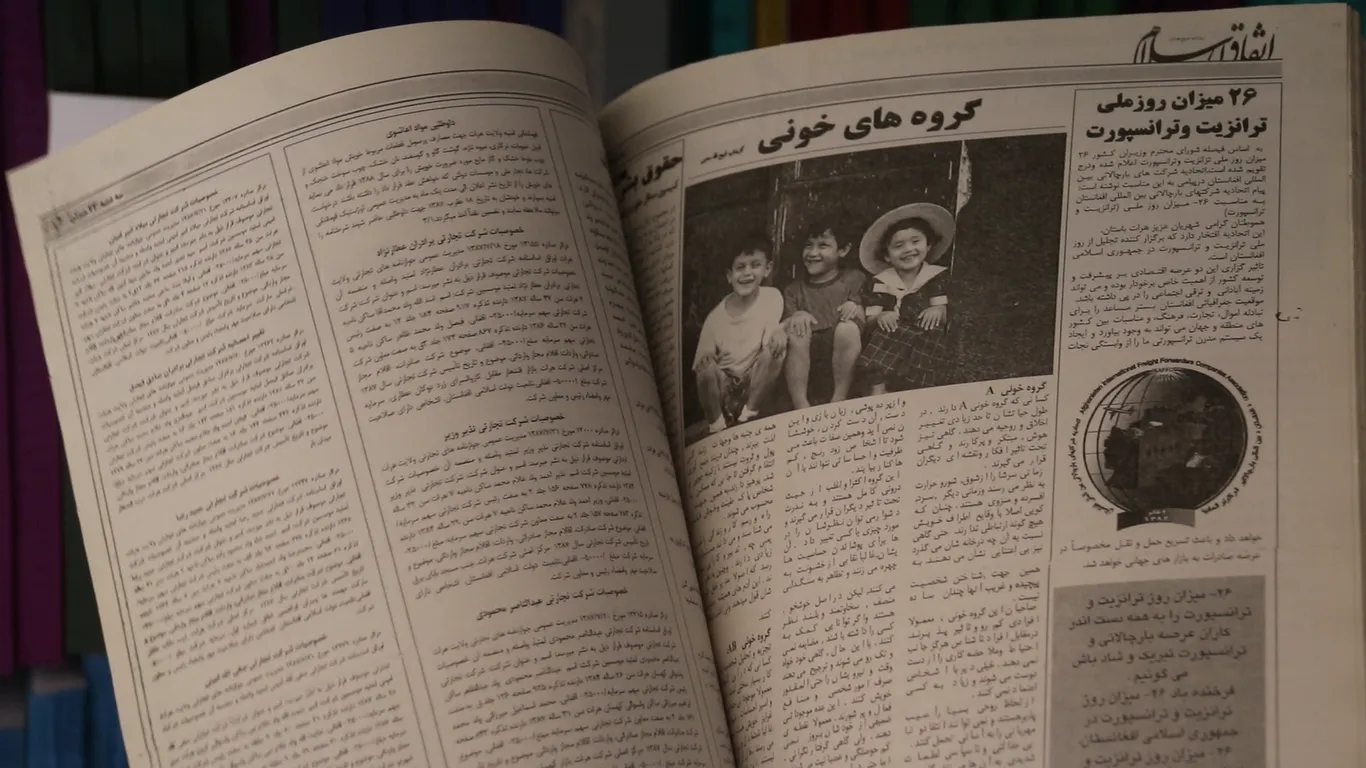
HERAT, Afghanistan — Ettifaq-e Islam, one of Afghanistan’s historic newspapers, has marked the 106th anniversary of the start of its publication in Herat, with local officials, writers, cultural figures and media professionals attending a commemorative ceremony.
The newspaper published its first issue on August 23, 1920 (1 Sunbula 1299 in the Afghan Solar Hijri calendar), during the reign of King Amanullah Khan, who ruled Afghanistan from 1919 to 1929. At the time, Abdullah Herawi served as the newspaper’s editor-in-chief.
More than a century later, Ettifaq-e Islam continues to publish in Herat and is currently the only print newspaper operating in the province, according to officials.
Faiq Herawi, the newspaper’s editor-in-chief, said the publication currently prints around 300 copies a day at the Herat Government Printing Press. The copies are distributed among readers in Herat city.
He said that throughout its 106-year history, Ettifaq-e Islam has continued to provide readers with coverage and articles on social, cultural and health-related issues.
According to Herawi, an annual subscription to the newspaper costs 300 Afghanis, equivalent to approximately $4.5, and the newspaper is delivered to subscribers’ homes six days a week by its staff.
Officials said that despite the rapid growth of digital technology and social media in recent years, Ettifaq-e Islam continues to have a readership in Herat.
The newspaper’s continued publication for more than a century reflects the long history of print journalism in Afghanistan. Its origins date back to the early years of the reign of King Amanullah Khan, a period associated with significant political and social changes in the country.
Today, as digital platforms and social media have transformed the way people consume news, Ettifaq-e Islam remains in circulation, connecting its long history with the changing media landscape of modern Afghanistan.